
 English
Sphagnum moss is widely used in plant cultivation, propagation, and animal habitats due to its excellent water retention and aeration properties. However, not all sphagnum moss is safe or suitable for...
Learn More >
Venus flytraps need a consistently moist, low-mineral root environment, but ‘moist’ should not mean a dense, airless plug. Sphagnum moss can provide both water retention and pore space when it is prepared and packed correctly. The same material can perform poorly when it is compressed around the roots.
Root decline is rarely diagnosed from one symptom. Water quality, container drainage, temperature, light, dormancy, and crown depth should be reviewed together with the growing medium.
Loose fibers create connected pores that move air and water. Heavy packing reduces those pores, slows drainage, and makes the wet zone more uniform from top to bottom. Roots may then remain in a low-oxygen condition for longer than intended.
When using sphagnum moss for Venus flytraps, rehydrate and fluff the moss first. Place it around the roots with enough support to hold the plant, but do not ram it into the pot.
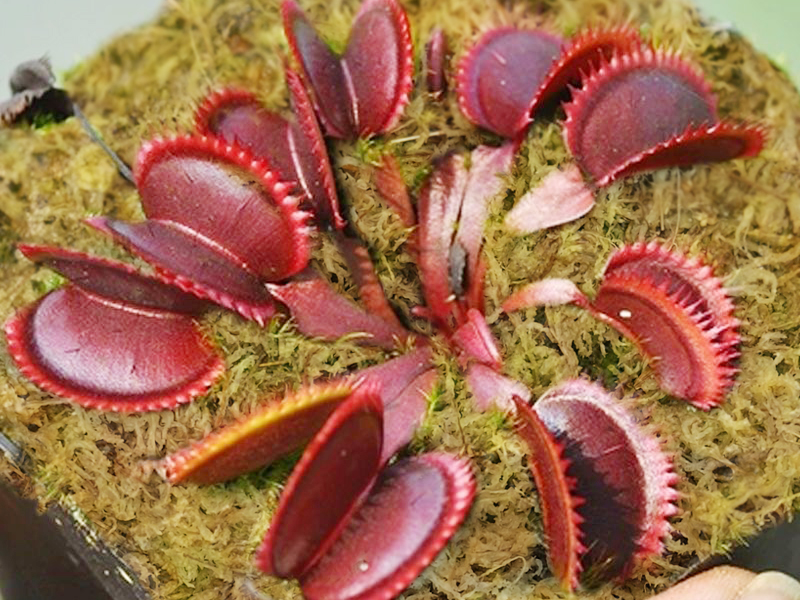
Individual traps naturally age and blacken. Concern increases when new growth repeatedly emerges weak, the crown softens, the plant loses anchorage, or decline continues under otherwise suitable seasonal conditions.
Unpotting a stressed plant can add damage, so inspect external factors first: water mineral content, tray depth, drainage holes, heat, light, and recent repotting. If roots are inspected, healthy Venus flytrap roots are typically dark on the outside with living tissue toward the tips; diagnosis should consider the whole plant.
Carnivorous plants are sensitive to dissolved minerals. A pot may look sufficiently wet while salts accumulate from an unsuitable water source. Use rainwater, distilled water, or another low-mineral source that has been verified for carnivorous plants, and monitor it with an appropriate meter if consistency matters.
Do not add ordinary potting fertilizer to the root zone unless following a species-specific, tested program. Venus flytraps evolved in nutrient-poor conditions, and excess dissolved nutrients can damage roots.
Prepare clean, fully rehydrated moss and a pot with reliable drainage.
Remove old media carefully without pulling fine roots.
Create a loose cavity and position the roots downward rather than folding them into a tight ball.
Set the crown at the appropriate surface level and fill gently around it.
Water thoroughly with the validated water source and allow excess water to drain.
Return the plant gradually to its normal light and temperature routine if it has been disturbed.
A healthy medium cannot compensate for inadequate light or chronic overheating. Provide species-appropriate light, seasonal care, and airflow. Tray watering can maintain moisture, but the depth and frequency should reflect pot size, climate, and the grower’s established method.
For a nursery trial, record media lot, fill weight, pot size, water source, and irrigation. That makes it possible to identify whether failures follow a material, handling, or environmental change.
Yes, many growers use long-fiber sphagnum, but it must be low in unwanted minerals, prepared cleanly, and packed with enough aeration.
The root zone should remain consistently moist, but management must avoid stagnant, overly compact conditions. Pot, climate, and watering method affect the balance.
It depends on dissolved mineral content. Use a verified low-mineral source; rainwater or distilled water is commonly used when tap water is unsuitable.
Repot when the medium breaks down, becomes contaminated, the plant outgrows the pot, or the growing system requires renewal. Avoid unnecessary disturbance during stress.
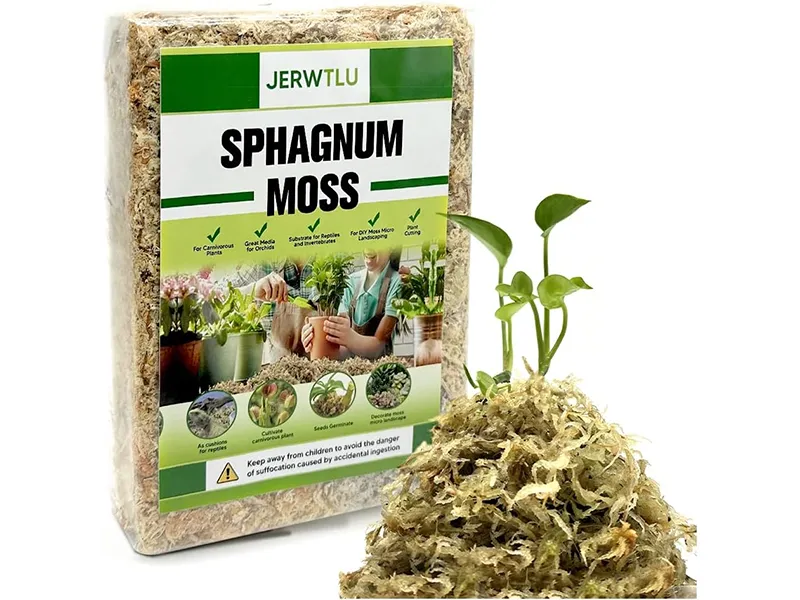
JERWTLU supplies graded sphagnum products for cultivation. Growers should validate water, packing density, and irrigation together, then keep records by lot so root-zone performance can be improved from evidence rather than guesswork.
 Comprehensive Cultivation Guide.png "What Is the Best Substrate for Nepenthes? (The Power of LFSM)")